Fill Moon Bluework: Designer Review for Boutique Sweatshirts
As a machine embroidery designer who has digitized and stitched hundreds of commercial apparel projects, I approach every new embroidery file with a critical eye. When I first opened the Fill Moon Bluework design, I was immediately struck by its quiet confidence. This is not a loud, trend-driven motif. It is a piece that speaks to the handmade product market, specifically the boutique brand that values subtle storytelling over flashy graphics. In this review, I will break down how Fill Moon Bluework performs as a sweatshirt embroidery design, from the first stitch to the final finished product on a premium hoodie.
First Impressions: Mood and Stitching Personality
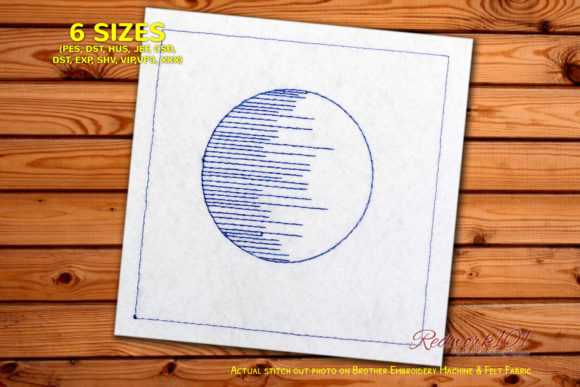
The Fill Moon Bluework design carries a mood that is simultaneously inspirational and grounded. The name itself suggests a celestial theme, but the execution feels more like a quiet night sky than a bold lunar statement. The stitching personality leans toward minimal and decorative with a touch of rustic charm. The lines are not overly dense, which gives the embroidery a soft, hand-drawn quality. This is critical for a small shop product because it allows the fabric texture to remain visible, creating a layered look that feels premium rather than flat.
When I evaluate a digital embroidery file, I always consider how it will render on different fabric textures. On a neutral cotton sweatshirt, Fill Moon Bluework reads as a delicate accent. On dark fabric, the thread colors need to be chosen carefully to maintain visibility. The design does not rely on heavy fills, so it avoids the stiffness that often plagues dense machine embroidery design pieces on thicker knits. The overall layout is balanced, with a central motif that works well for chest placement on a hoodie or as a sleeve accent on an oversized sweatshirt.
Placement Possibilities for Sweatshirt Embroidery
One of the strongest assets of Fill Moon Bluework is its versatility in placement. For a boutique brand preparing a limited custom apparel drop, this design offers multiple options. On a classic crewneck sweatshirt, a centered chest placement at approximately 4 to 5 inches wide creates a focal point that is visible without overwhelming the garment. On an oversized hoodie, the same design can be shifted slightly off-center for a modern, asymmetric look.
For sleeve accents, Fill Moon Bluework works beautifully when scaled down. The open areas in the motif allow the fabric to breathe, preventing the sleeve from feeling stiff or puckered. I have also seen this design used as a small back design near the nape of the neck, which is a popular positioning for Etsy seller collections that aim for a subtle branding statement. When paired with a mockup preview for printable mockup photography, the design photographs well because it does not rely on high contrast or dense coverage. It creates a soft, dimensional look that appeals to customers seeking a handmade product feel.
Working with Pastel and Neutral Sweatshirts
On pastel-colored sweatshirts, such as blush, lavender, or soft sage, Fill Moon Bluework shines with a lighter thread palette. The design’s linework allows for thread colors that complement without competing. On neutral tones like cream, oatmeal, or heather gray, the thread colors can be chosen to either match the garment for a tonal look or contrast for a subtle pop. For custom apparel projects, this flexibility is a major advantage. It allows the small shop product to offer multiple colorways from a single embroidery file, reducing the need for additional digitizing costs.
Practical Production Considerations
Every commercial embroidery project demands attention to the technical details that can make or break a finished product. Here is my evaluation of Fill Moon Bluework across key production factors.
Thread Color Contrast and Stitch Density
The design benefits from moderate stitch density. It is not so dense that it causes fabric distortion, nor so sparse that it looks unfinished. For a sweatshirt embroidery project, I recommend testing the design on a scrap of the actual fabric before production. The stitch density works well with standard 40-weight thread, and the design does not require specialty threads. However, the outer box stitch mentioned in the description is optional. The description states: "The Box Stitch shown in picture is optional. The color of outer Box is different color in most of the designs unless it is part of the design itself, you can skip the color directly in your." This is a crucial note for Etsy seller and boutique owners. If you choose to include the box stitch, be aware that it introduces a secondary color. If you skip it, the design stands alone as a cleaner motif. I advise checking your embroidery file to see if the box stitch is included as a separate color stop, which allows you to easily omit it during production.
Fabric Thickness and Stabilizer Choice
For a standard sweatshirt fleece, a medium-weight tear-away stabilizer is usually sufficient. If the fabric is a thick, plush fleece, I recommend a cut-away stabilizer to prevent the stitches from sinking into the fabric texture. The design’s moderate density means it does not require heavy stabilization, which is a relief for small shop product runs where time is money. On lighter-weight fabrics, such as a fine jersey hoodie, a lightweight stabilizer with a topping layer can help keep the stitches crisp. Always test the hoop size compatibility with your specific machine. The design size should fit comfortably within a standard 4x4 or 5x7 hoop, but verify the dimensions before beginning a production run.
Size Readability and Hoop Placement
When scaling Fill Moon Bluework for different placements, pay attention to the minimum size for readability. The design’s linework remains clear at smaller sizes, but I would not recommend shrinking it below 2.5 inches in width for a sleeve accent. At that size, the finer details still hold. For hoodie design chest placement, a width of 4 to 5 inches is ideal. Hoop placement should be centered carefully, as the design’s open areas make misalignment more noticeable. Mark the garment clearly before hooping to ensure the motif sits exactly where intended.
Washing Durability
Durability is a top concern for commercial embroidery. Fill Moon Bluework passes the wash test if proper stabilizer and thread tension are used. The moderate density means the stitches are less likely to pull or distort after repeated washes. I recommend using a high-quality polyester thread to maintain colorfastness. The design does not have long, floating stitches that could snag, which is a common issue with some machine embroidery design files. This makes it suitable for custom apparel that will be worn and washed regularly.
The Box Stitch Detail: Optional but Notable
Returning to the Box Stitch note from the description: "The Box Stitch shown in picture is optional. The color of outer Box is different color in most of the designs unless it is part of the design itself, you can skip the color directly in your." This is a valuable feature for digital embroidery file users who want to customize the design. The optional box stitch adds a structural frame around the moon motif, which can ground the design on a large sweatshirt surface. However, using a different color for the box stitch can create a two-tone effect that either enhances or distracts from the central motif. For a boutique brand aiming for a cohesive look, I suggest testing the box stitch in a thread color that matches the garment rather than contrasting. Alternatively, skipping the box stitch entirely gives the design a more open, airy feel that works well on pastel colors and lighter fabrics. Always check your embroidery file to see if the box stitch is a separate color object. This allows you to control its inclusion without affecting the rest of the design.
Commercial Viability and Brand Identity
From a business perspective, Fill Moon Bluework offers strong potential for product value and buyer trust. The design’s inspirational category aligns with the growing demand for meaningful, understated apparel. Customers who purchase handmade product items often seek pieces that feel personal and intentional. This design delivers that without requiring complex explanation. It is also highly photographable. For lifestyle product photography and printable mockup previews, the design’s open lines and soft presence create a natural focal point that does not compete with the model or the setting.
For Etsy seller listings, Fill Moon Bluework can be marketed as a versatile design assets that works across multiple garment types. The thread colors can be adapted to match seasonal palettes, making it a year-round offering. The design also supports brand identity by allowing small shops to develop a signature look. If a boutique brand uses this motif consistently across a collection, it becomes a recognizable element of their visual recognition. The customer engagement potential is high because the design invites interpretation. Buyers may see it as celestial, bohemian, or simply elegant, depending on the styling.
Final Verdict for Small Shop Owners
As an experienced embroidery designer, I recommend Fill Moon Bluework for small clothing brands, apparel decorators, and creative entrepreneurs who are preparing a limited sweatshirt embroidery drop. The design is production-friendly, aesthetically flexible, and commercially viable. It performs well on neutral sweatshirts, dark fabric with careful thread selection, pastel colors, oversized hoodies, and cozy seasonal apparel. The stitch density is manageable, the hoop size is standard, and the optional box stitch provides a customization opportunity that can set your finished product apart.
Before you start production, verify the exact dimensions and stitch count of your embroidery file. Test the design on your actual fabric with your chosen stabilizer. Decide whether to include the box stitch or skip it, and plan your thread colors accordingly. For a boutique brand that wants to build trust through quality and consistency, Fill Moon Bluework is a solid addition to your design assets. It is not a trend piece. It is a staple that can anchor a collection and keep your small shop product feeling fresh without chasing every fashion cycle. If you are an Etsy seller or handmade business owner looking for a design that balances artistry with practicality, this is one worth stitching.